
Apps ads
Wispr Flow’s Facebook and Instagram ads
- Running now
- 301
- Winners
- 128
- New in 30 days
- 5
- Average run
- 40 days
- Longest run
- 317 days
Ads running now
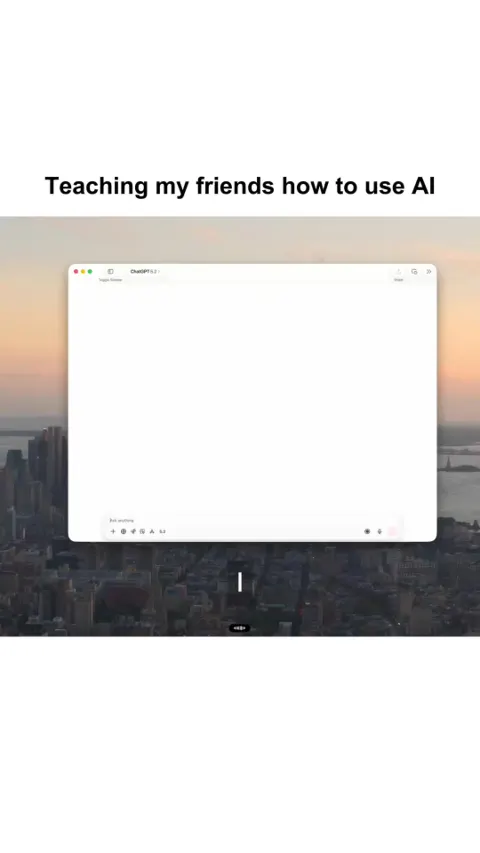 VideoStop typing AI prompts239 days
 VideoBuilt a Valentine's game using only voice239 days
 VideoStop Typing to Your AI234 days
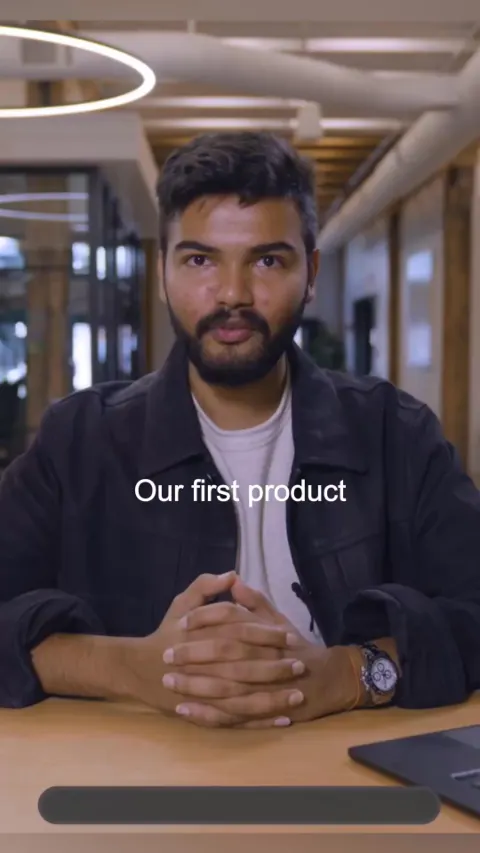 VideoWe built a better dictation app140 days
 VideoWay more accurate than Siri250 days
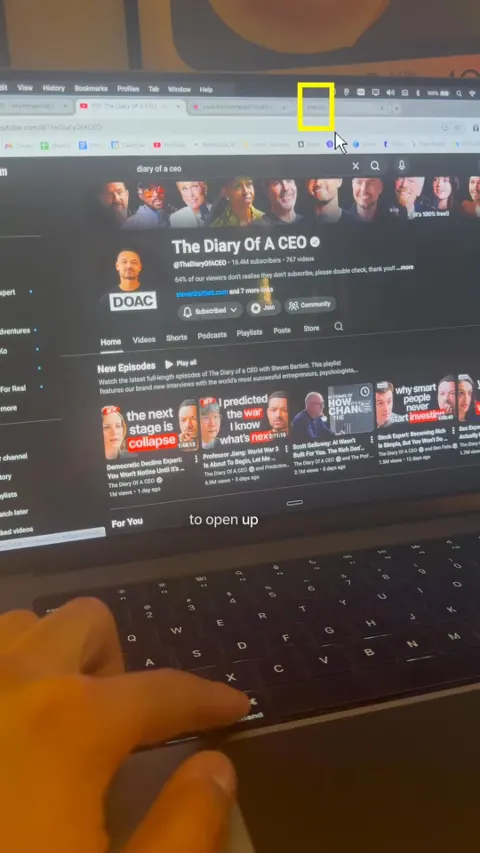 VideoYou're using your Mac wrong141 days
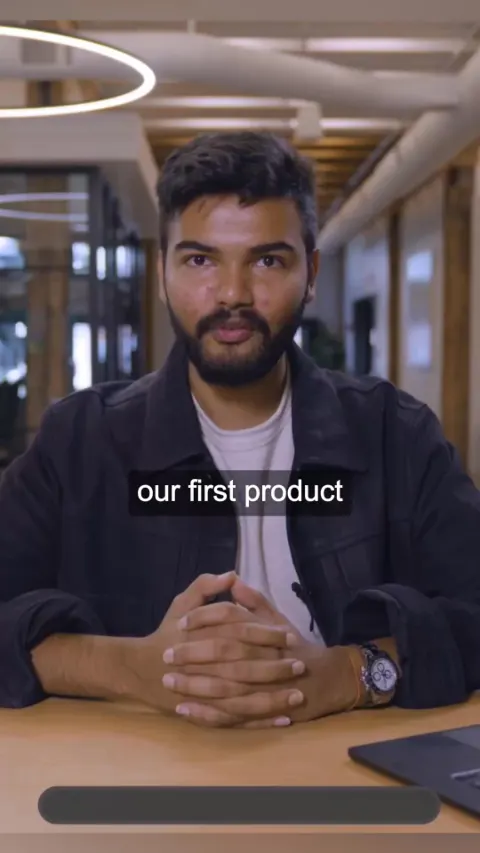 VideoMore accurate than Siri250 days
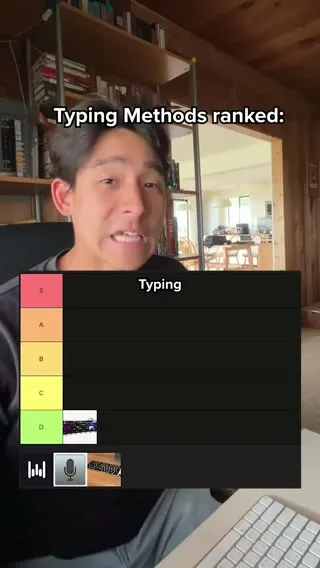 VideoThe S-tier way to write113 days
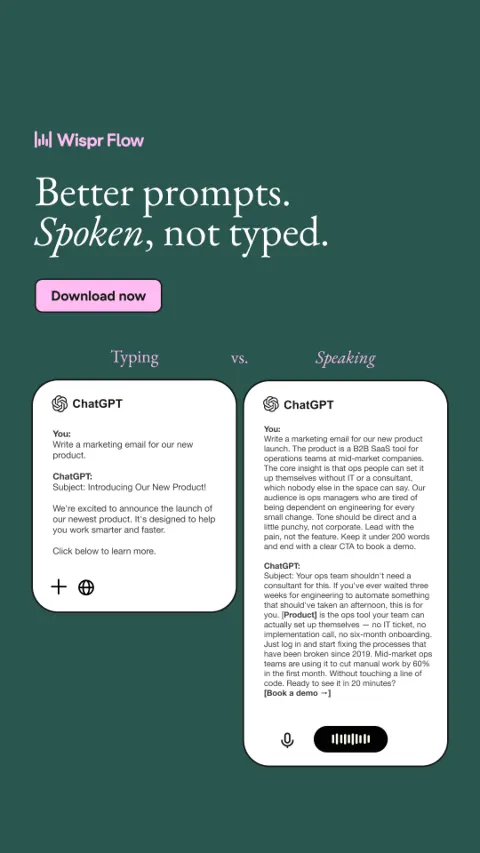 Speak it, skip the typing108 days
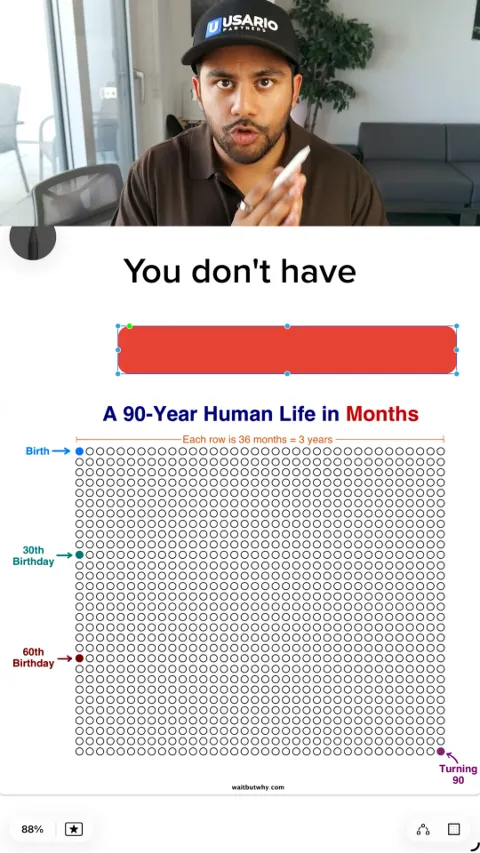 Video40 hours a week, gone113 days
 Talk, then let it run108 days
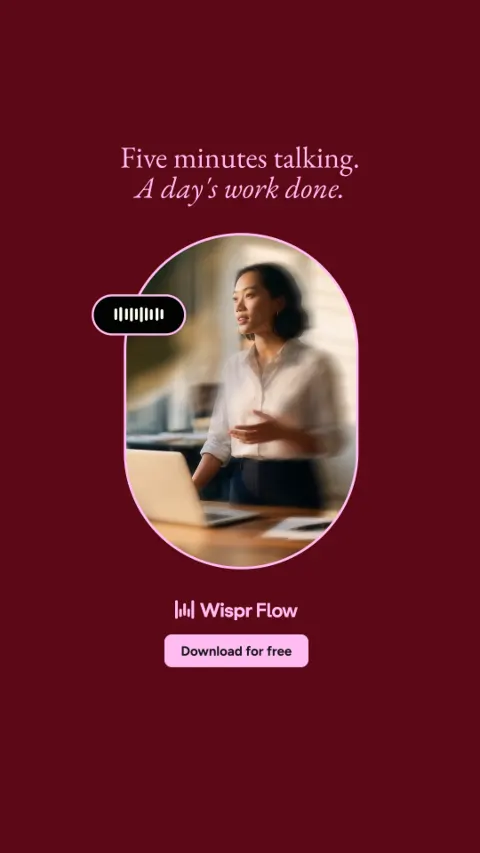 Get hours back daily108 days
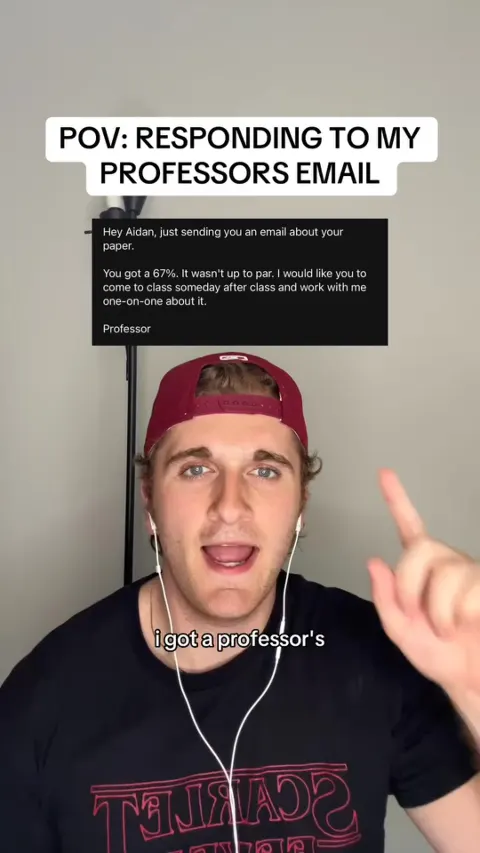 VideoThe email you keep avoiding113 days
 VideoOne voice, every app113 days
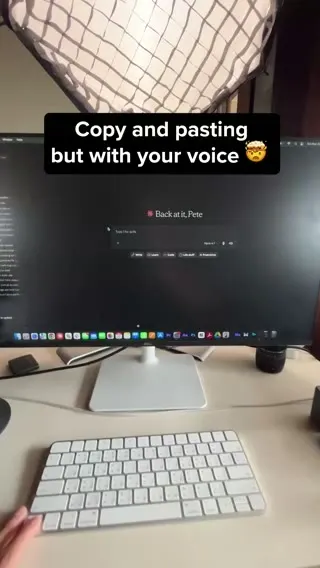 VideoSay a word, paste a snippet113 days
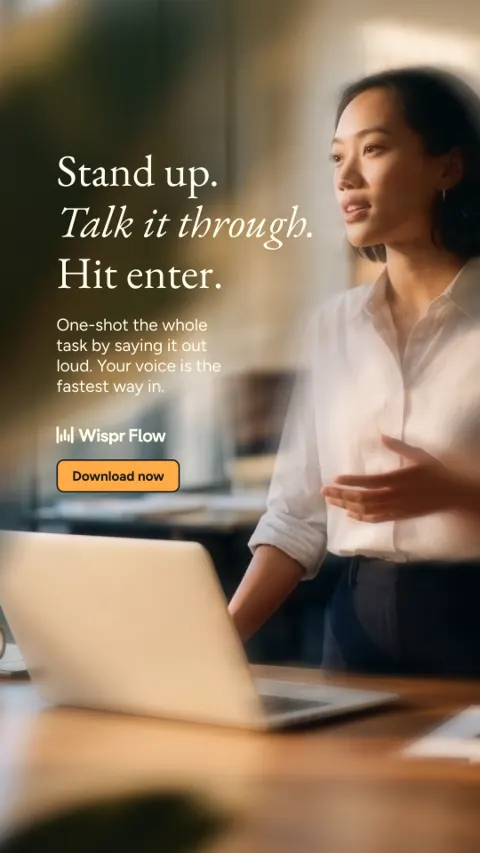 One-shot the whole task108 days
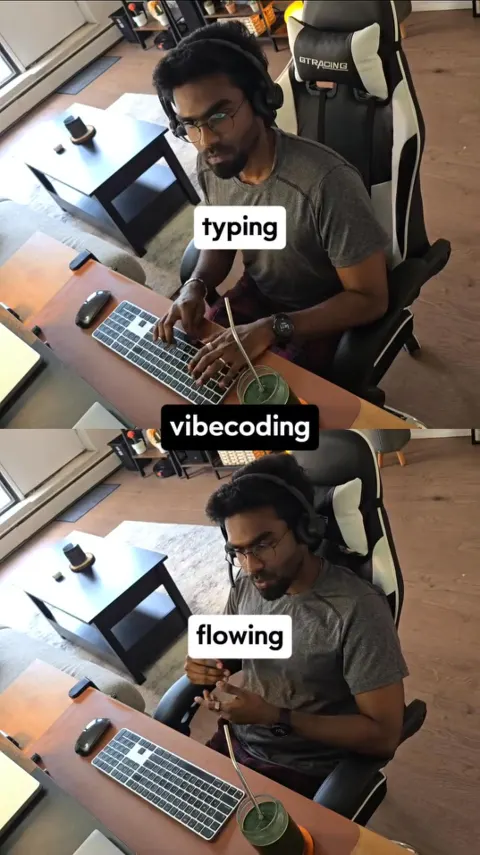 VideoTry Flow free148 days
 VideoWispr Flow: 4x faster than typing140 days
 Video50 brand pitches a day120 days
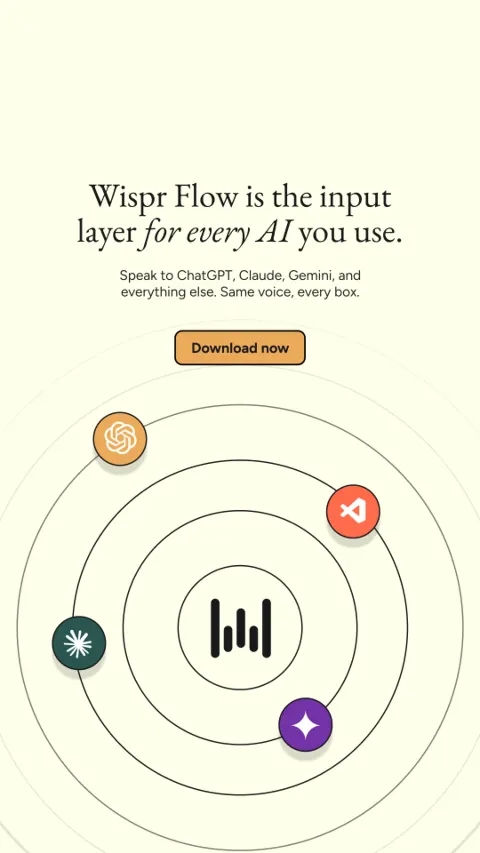 The input layer for AI108 days
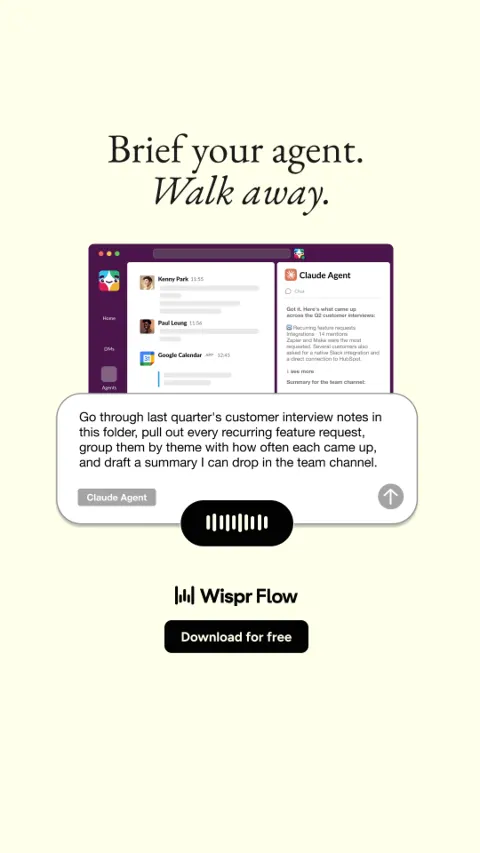 Watch an agent run it108 days
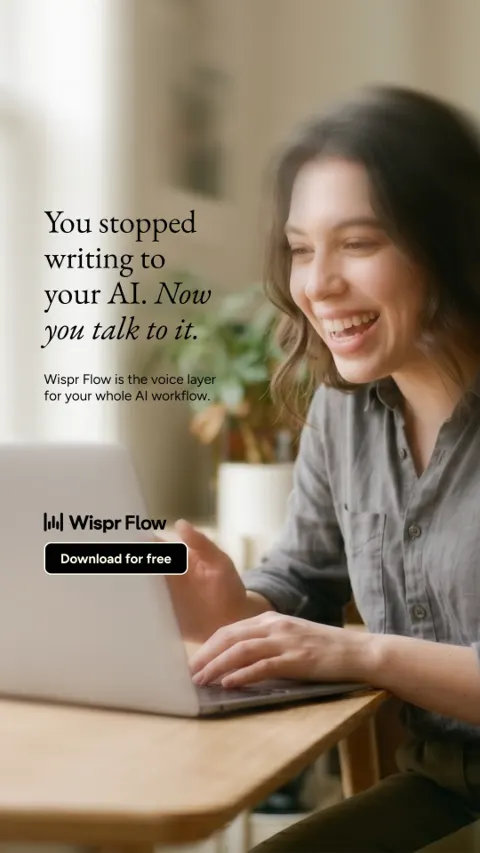 Stop writing. Start talking.108 days
 VideoWispr Flow: Voice-to-text that just works140 days
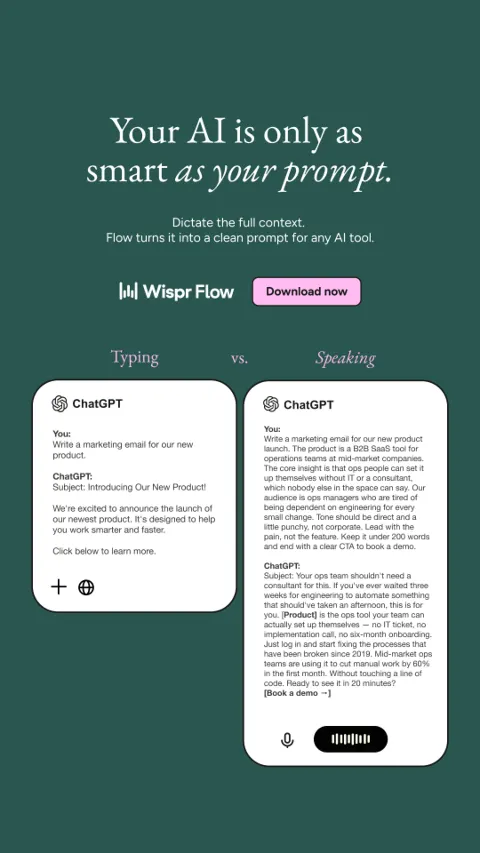 Smarter prompts, spoken108 days
What it runs
- Formats running now
- Videos 224 · Carousels 55 · Images 22
- Styles
- UGC, Carousel, Demo, Comparison, Testimonial, Review
- Where its ads ran
- Facebook and Instagram
How its best ads open
- “This designer stopped typing prompts into ChatGPT and Midjourney.”
- “This developer built a full game for Wispr Flow's Valentine's @contra challenge without touching his keyboard.”
- “aliabdaal types at 150 words per minute. But he still switched to voice.”
- “We built the most accurate voice dictation model on the market.”
- “We built our own AI model that's 2x more accurate than Siri and removes filler words automatically.”
Why its best ads work
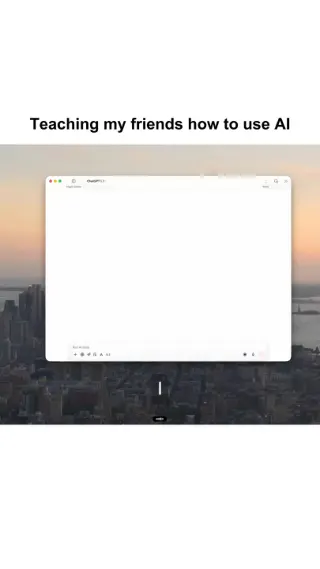
Swap typing AI prompts for speaking them, and a tool turns your spoken description into the finished prompt.
It names a specific, familiar chore and offers a clear alternative in a few short lines. Showing a designer in a real workflow with named tools makes the benefit concrete for the target audience. The data also shows it has run for 239 days and is still active across five placements with 11 live ads, which suggests the angle holds up well over time, though the data doesn't say why.
- Open with a command that calls out a habit your audience already has, so the product reads as the fix.
- Name the exact tools and role your audience uses so the ad feels made for them.
- Explain the mechanism in one plain sentence before listing benefits.
- Finish with a low-friction CTA that covers price and platform, like 'free' plus supported devices.
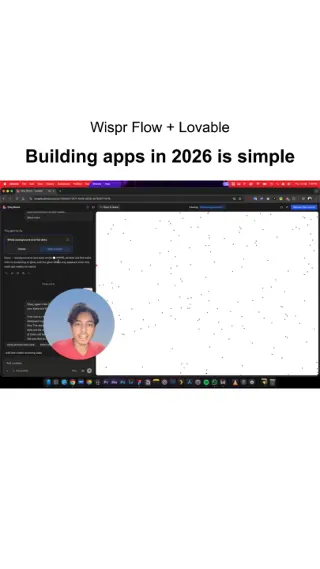
A real developer's finished project shows that you can build and ship a full game by voice alone, which makes the 4x faster than typing claim feel believable.
It shows the product through a person's finished project instead of a feature list, so the claim comes with evidence. The named tools make it relevant to a specific builder audience, and the short benefit line plus one speed number gives a clear reason to click. The data also shows it has run for 239 days, is still active, and sits across 12 active ads on five placements, which suggests the advertiser keeps getting results from this kind of proof-led approach.
- Lead with a surprising, specific outcome in the headline, such as what someone built and the constraint they worked under.
- Use a named real user and the tools they used so the proof feels credible and speaks to a niche audience.
- Tie the story to a challenge or seasonal moment to give the content a reason to exist now.
- Close with one simple benefit and one number rather than stacking many claims.
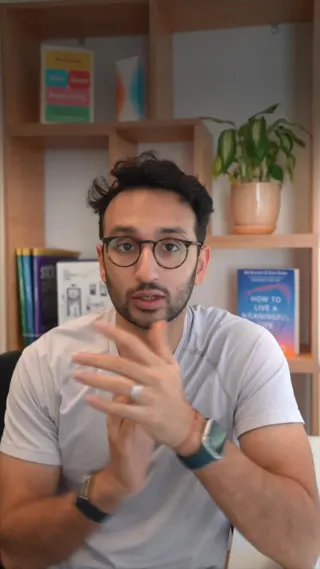
A well-known creator who already types fast still chose voice, so the product's value is borrowed from his credibility and his own proof that speed isn't the issue.
It borrows trust from a creator the audience already follows, and the fast-typist twist answers the biggest objection (I type fast enough) before it comes up. The feature lines are short and each one beats a known frustration with built-in dictation, and the free month lowers the risk of trying. The data also shows it has run 234 days and is still active across five placements with 15 live ads, which suggests the approach keeps performing.
- Open with a named, credible person and a fact that contradicts what the audience expects, so the hook creates a question.
- Pre-empt your biggest objection inside the hook instead of saving it for later in the copy.
- Compare against the default tool people already use, as 'better than Mac dictation' does, to make the benefit concrete.
- Give each creator or partner a unique link and code so the offer feels personal and the results are easy to track.
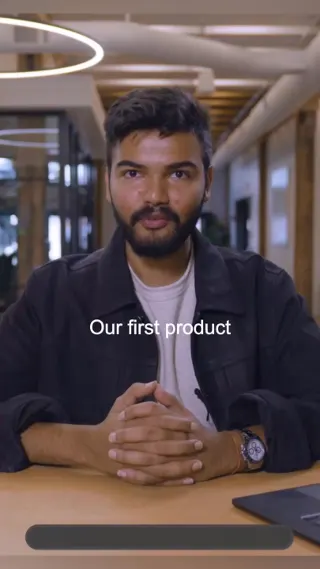
It claims its dictation is twice as accurate as Siri, the tool most people already know, and says it works on every device.
It picks a familiar rival, so the benefit is understood in seconds without explaining the technology. The cross-device line removes the common worry that a new tool will only work in one place. The data also shows it has run for 140 days, is still active, and sits across 8 active ads on five placements, which suggests the advertiser keeps getting results worth funding. The format is a video, but the words alone don't show what happens in it, so the demo style is an inference.
- Name a well-known alternative and give one simple comparison so the benefit lands without extra explanation.
- Lead with a short, direct claim in the headline and let the post text back it up with a number.
- Answer the 'will it work for me?' question early by listing the devices or places it works.
- Keep the call to action simple and matched to the goal, like a single Download button for an app.
More app brands





Make ads like these for your brand
Paste your website. Adwright studies the ads winning in your niche, then makes ads in your brand, ready to post.