
Software ads
Arcads’ Facebook and Instagram ads
- Running now
- 25
- Winners
- 66
- New in 30 days
- 0
- Average run
- 113 days
- Longest run
- 264 days
Ads running now
 VideoAI Video Ads234 days
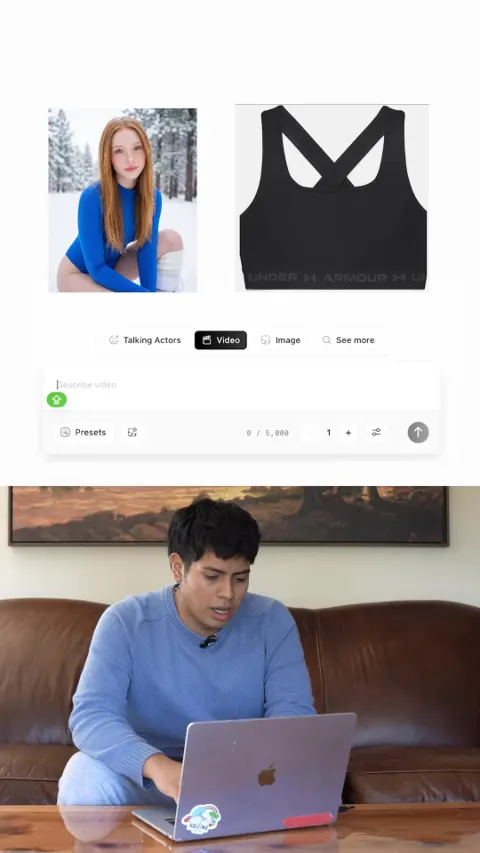 VideoUltra-Realistic AI Ads257 days
 VideoUltra-Realistic AI Ads212 days
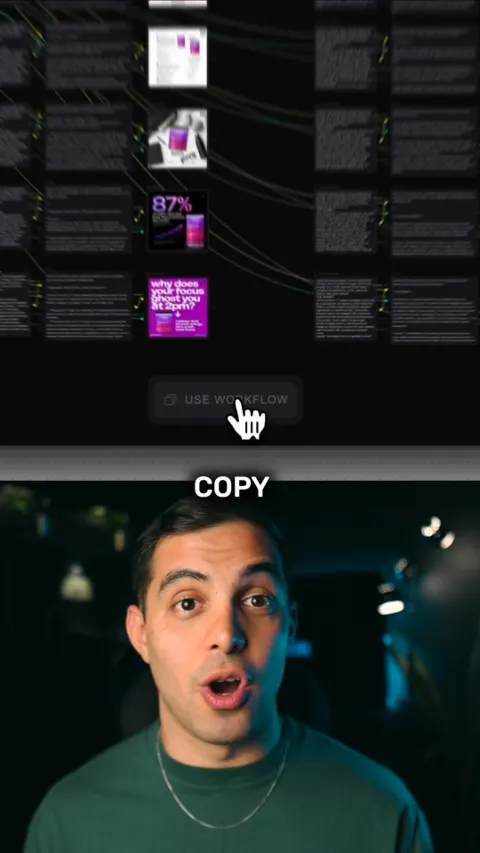 VideoUltra-Realistic AI Ads163 days
 VideoUltra-Realistic AI Ads169 days
 VideoUltra-Realistic AI Ads92 days
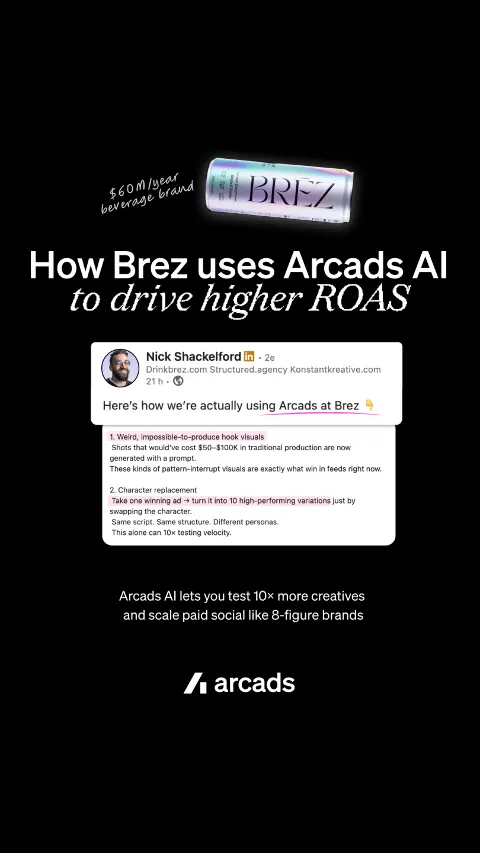 AI Ad by Arcads110 days
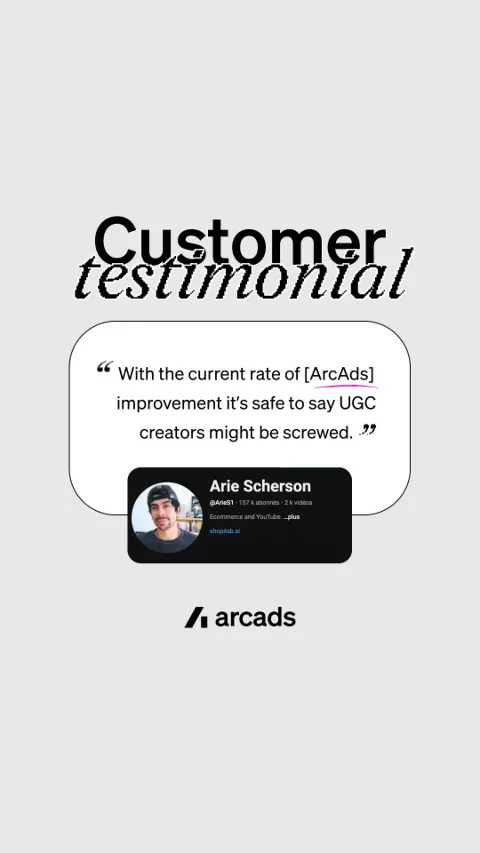 AI Ad by Arcads110 days
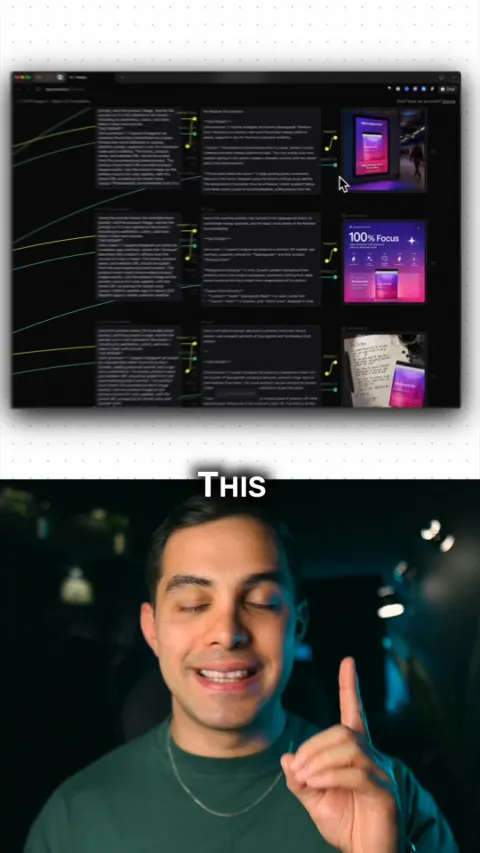 VideoUltra-Realistic AI Ads163 days
 Video170 days
 Video183 days
 Video176 days
 VideoUltra-Realistic AI Ads117 days
 Video171 days
 Video142 days
 VideoUltra-Realistic AI Ads169 days
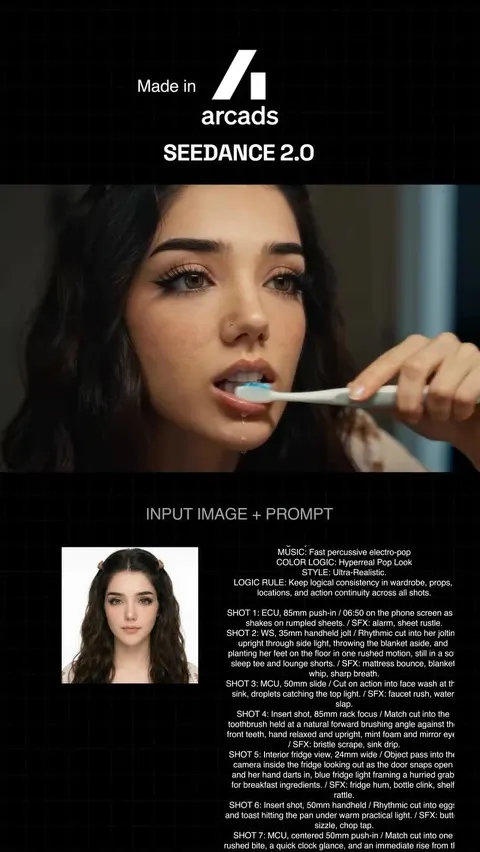 Video169 days
 VideoUltra-Realistic AI Ads170 days
 Video256 days
 Video235 days
 Video🇫🇷 Acteurs IA + voix FR176 days
 Video🇫🇷 Acteurs IA + voix FR176 days
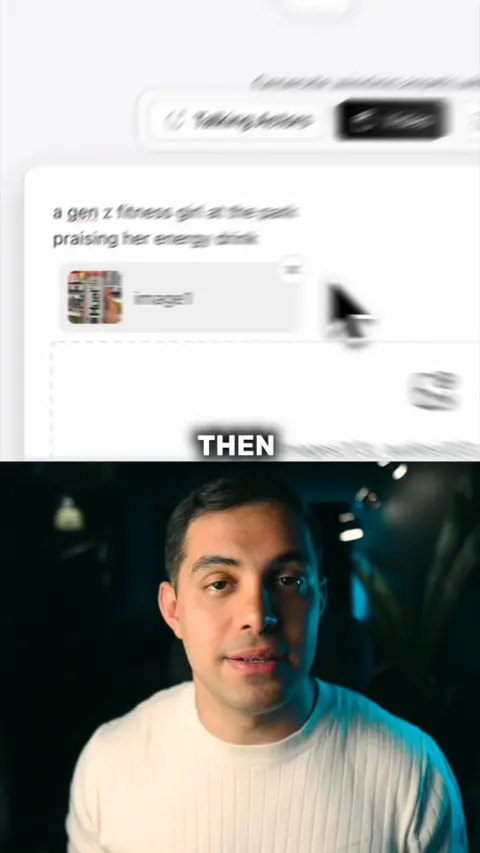 VideoUltra-Realistic AI Ads170 days
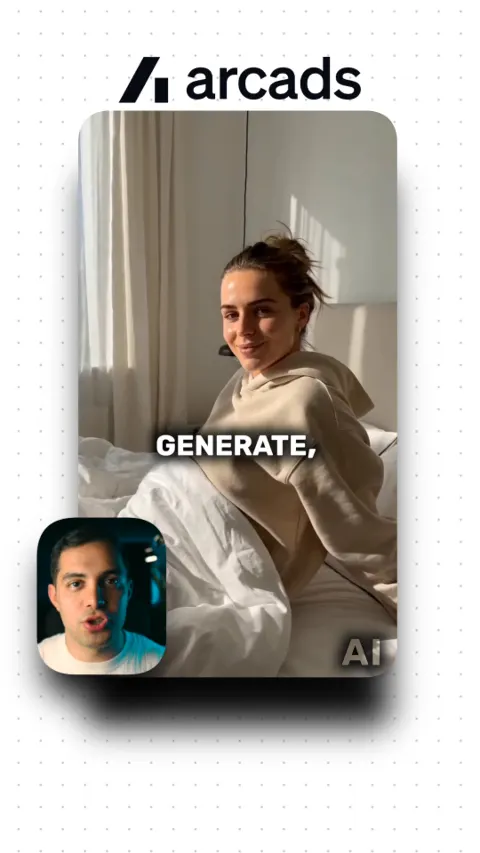 VideoUltra-Realistic AI Ads170 days
What it runs
- Formats running now
- Videos 23 · Images 2
- Styles
- Listicle, Comparison, Tutorial, Demo, UGC, Before & after
- Where its ads ran
- Facebook and Instagram
How its best ads open
- “3 Reasons NOT to Use Arcads”
- “Creative AI is changing how ads are made.”
- “Arcads AI is changing how ads are made.”
- “with Arcads & claude, instead of shooting new videos every week, you generate high-quality AI ads in minutes.”
- “Creative AI is the next big shift in advertising.”
Why its best ads work

It flips the 'reasons not to buy' format into sarcastic reverse psychology, so each supposed downside is really a benefit (speed, volume, low cost).
The reverse framing turns a plain feature list into something playful and easy to skim, and the ironic parentheticals handle the 'too good to be true' objection with humor. Each line pairs a specific quantity or price with a time or cost benefit, so the value is clear in seconds. The data also shows it has run for 234 days, is still active and sits across 25 active ads on five placements, which suggests the format has held up well and been worth scaling.
- Try flipping a benefit list into 'reasons not to buy' so each fake downside quietly sells a strength.
- Pair every claim with a concrete number and a time or cost anchor so the value is instantly clear.
- Add a short, seasonal 'before and after' line to create urgency without a hard discount.
- Use a light, self-aware tone in the brackets to defuse skepticism about bold claims.
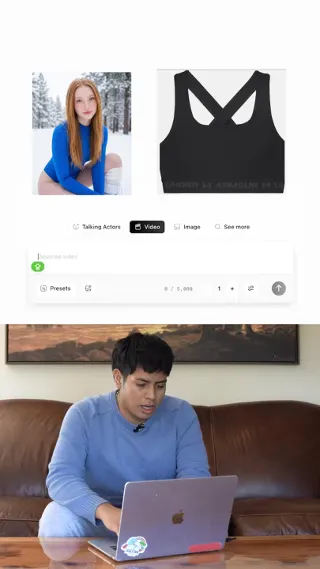
Arcads turns a product photo into a realistic AI creator video in minutes, so teams can make and refresh ads at scale without new shoots.
It pairs a trend-driven hook with a very simple three-step process, so the effort feels tiny compared with the weekly pain of shooting new videos. The team count adds social proof and a sense that others are already ahead. The data shows it has run 257 days across five placements and is still active on 14 ads, which suggests the message keeps performing and is being tested in variations.
- Name the old, costly way of working (new shoots every week) and set your product against it in one line.
- Break the product into three short steps so the ease of use is clear at a glance.
- Back the claim with a specific adoption figure, but only use numbers you can verify for your own brand.
- Finish on the outcome the buyer cares about, such as testing more hooks and refreshing creatives, not just the feature.

It sells speed and ease by showing a simple three-step process that turns a product photo into a finished video ad with an AI creator.
It names a clear, recurring pain (the weekly need for new creatives) and answers it with a simple three-step flow that makes the product feel easy to try. The user count adds credibility and a sense that others are already moving this way. The data also shows it has run for 212 days and is still active across 15 ads on five placements, which suggests it keeps paying off and has been scaled widely, though the data does not show actual results.
- Open with the old way versus the new way so the viewer instantly sees what they would stop doing.
- Break your process into a few numbered steps with a concrete input and output to make the product feel easy.
- Use a real adoption number as social proof, but only if you can back it up.
- Tie the benefit to an ongoing habit, like refreshing creatives weekly, so the product feels necessary and not a one-off.
It sells speed and realism by showing a simple three-step process that replaces weekly video shoots with AI creators.
It pairs a clear before and after (weekly shoots versus minutes) with a three-step process that makes the product feel easy to try. The user count and the 'normal way to produce creatives' line add social proof and a sense of momentum. The data also shows it has run 163 days, is still active and sits across 15 active ads on five placements, which suggests the message holds up under heavy, sustained spend.
- Name the one outcome in the headline in plain words so the scroll stops on the benefit, not the brand.
- Break your process into a short numbered list so a complex product feels simple to start.
- Contrast the old painful routine with the new fast one to make the value obvious.
- Back the claim with a real customer count, and only use numbers you can support.
More software brands


Make ads like these for your brand
Paste your website. Adwright studies the ads winning in your niche, then makes ads in your brand, ready to post.